
History
The Landmark Theatre and its role in the history of Central New York, architectural design and our nation’s culture has been well documented in a wide variety of industries.
From being listed on the United States Park Service National Register of Historical Places to being reviewed by Cinema Treasure, the Syracuse treasure is noted for its historical and cultural significance.
Our History
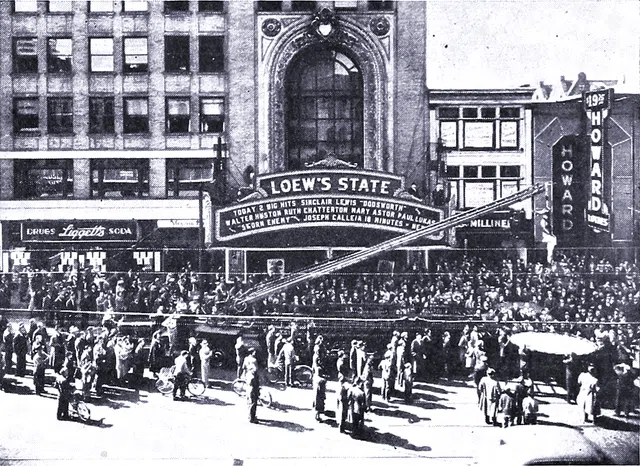
In the 1920s, downtown Syracuse was home to five “movie palaces” including four on Salina Street, Syracuse’s “Little Broadway.”
Marcus Loew, founder of MGM Pictures and Loew’s Cinema, wanted to outdo them all. At a cost of $3.4 million dollars, he commissioned the construction of the Loew’s State Theater.
Loew’s State was to be the largest and grandest of them all, designed by noted theater architect Thomas Lamb.
Opening on February 18, 1928, the Loew’s State was an instant success and immediately became a centerpiece of Syracuse’s arts and culture community.
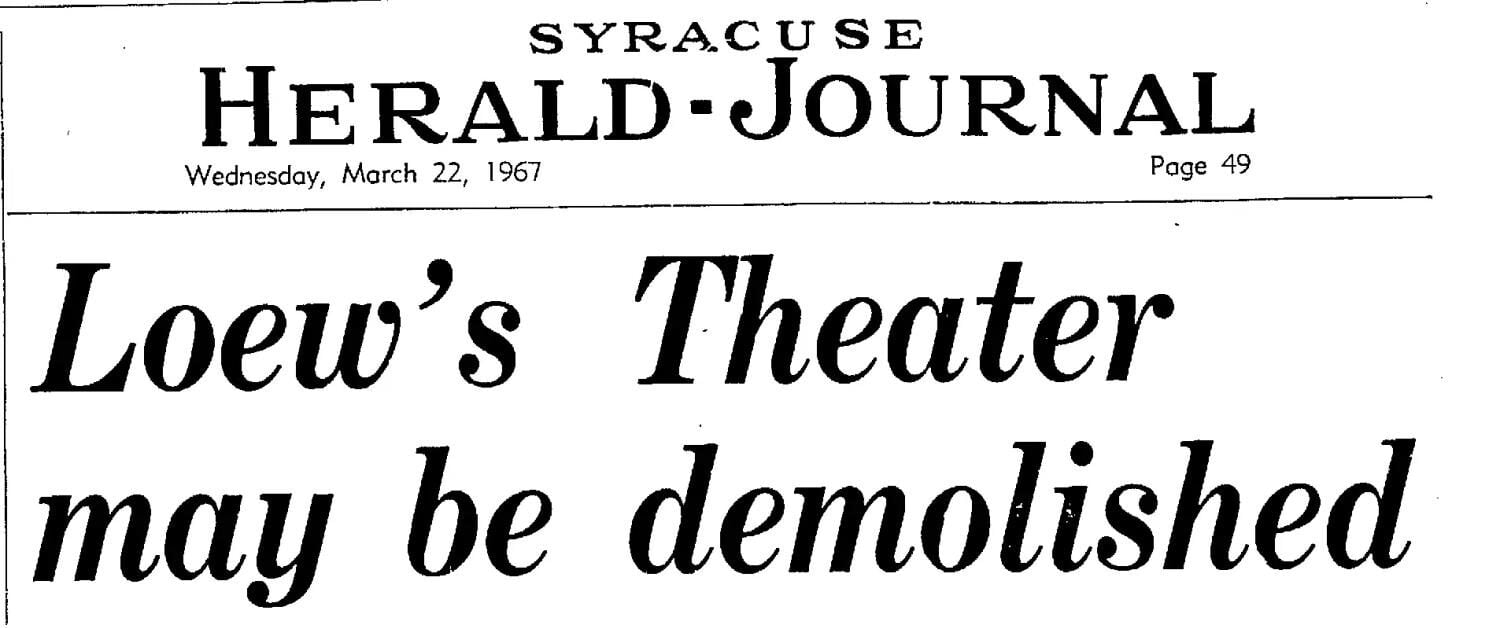
By the 1970s, beset by the rise of television, suburbanization, and anti-trust regulation, the age of the movie palace was over.
The Loew’s State was no longer a viable business but still occupied a place in the hearts of central New Yorkers. When Loew’s announced its closure, the community rallied to save it.
The Committee to Save Loew’s raised awareness, gave tours, and inspired a movement to preserve this community asset.
The Committee raised $35,000 and the New York State Office of Parks, Recreation, and Historic Preservation matched it, allowing Syracuse Area Landmark Theatre (or SALT) to purchase the newly dubbed Landmark Theatre in 1977.
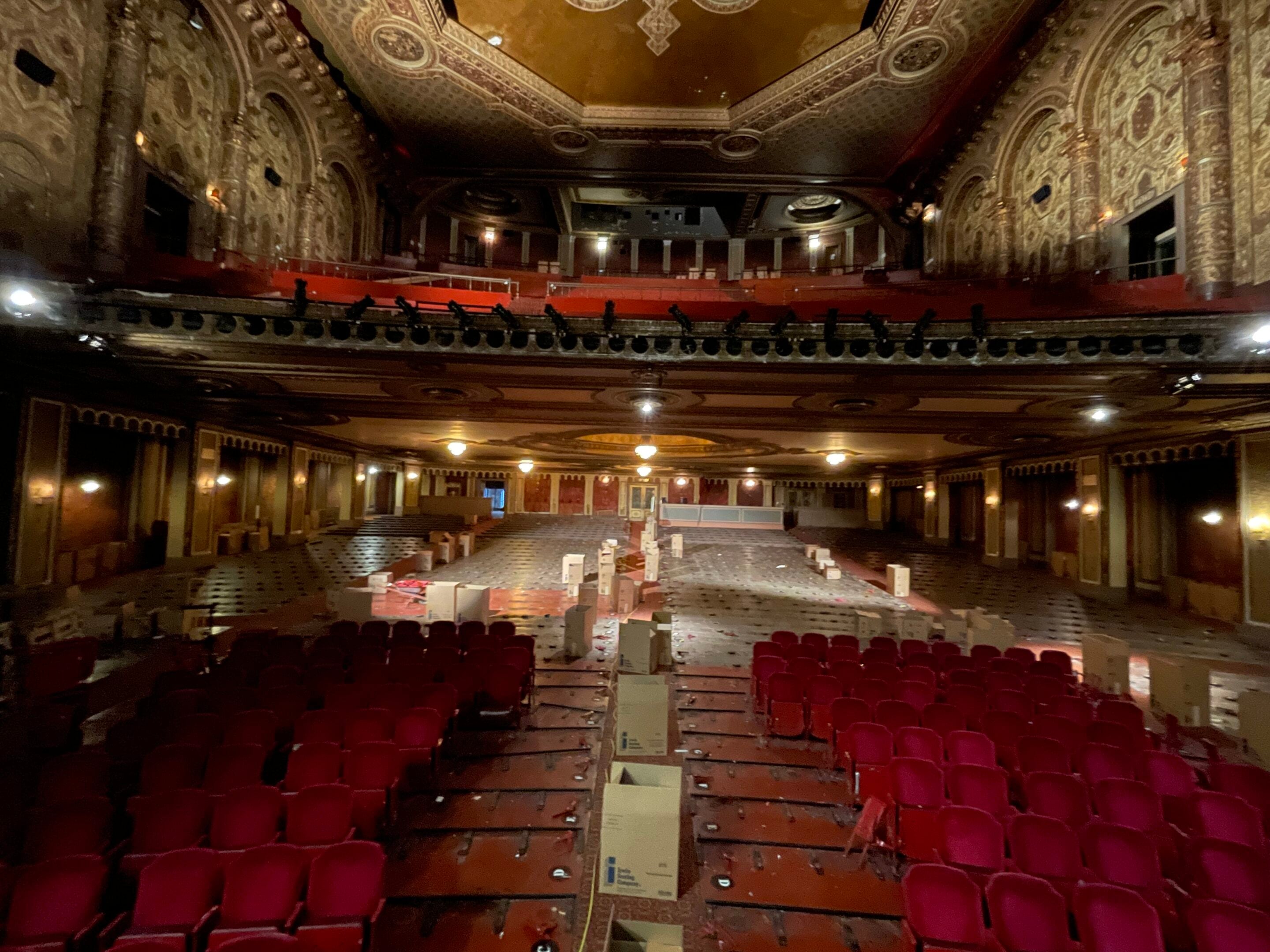
Since acquiring the property in the late 1970s, Syracuse Area Landmark Theatre has sought to make the Landmark a place to be proud, including multiple restoration and capital improvement projects both large and small.
These projects focus on three key areas: historic preservation, meeting critical infrastructure needs, and accessibility and improving the customer experience.
The largest and most critical of these projects was the 2010 expansion of the stagehouse and production areas.
This $16 million project enables the Landmark to host the largest touring Broadway productions like Phantom of the Opera, Hamilton, Wicked, and Disney’s The Lion King.
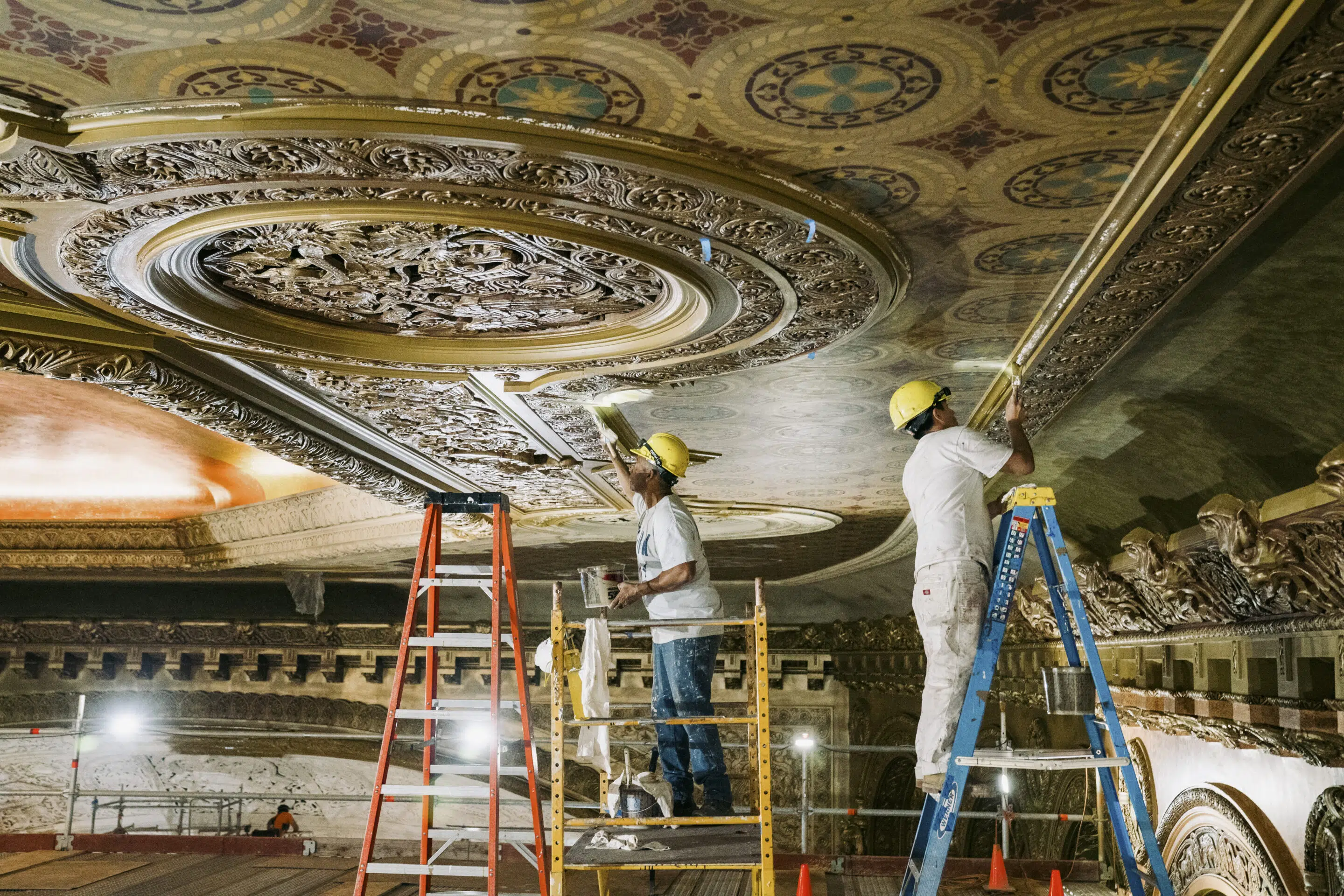
In summer 2025, the Landmark closed for the first phase of our latest major restoration efforts.
The craftspeople and artists from John Tiedemann, Inc. restored the proscenium arch which surrounds the stage, as well as the balcony walls up to the second landing.
Plaster was cleaned, primed, repaired, and repainted in the theatre’s original colors which had degraded following nearly a century of age and hard use.
But the work is not done. In summer 2027 we will continue the restoration in the orchestra level, loge and balcony entrances, and the rear of the balcony, including replacing all of the decorative fabric damask which rings the theatre.

The Landmark Theatre is a living connection to our history and an example of stunningly preserved architecture, and its impact is not limited to intangibles.
Through our partnerships with presenting organizations like Famous Artists and Live Nation Entertainment, the Landmark offers a wide variety of theatre, music, and live performance events for audiences of nearly all ages and interests.
The Theatre attracts over 150,000 guests each year, more than half of whom travel from outside Onondaga County and generates over $10 million dollars in economic activity annually.